Sunday, December 19, 2010

jAPS 2.0 Project Life Cycle

Regarding to the different phases of platform life cycle, there are many stakeholders who interact with the platform:
Conception and design
The flexibility of the jAPS 2.0 Platform allows to design systems, consistent with project objectives and customer needs. User interface and contents organization can be designed with any constraint.
Development/production
jAPS 2.0 Platform separates the Java development context (additional modules, integrations and customizations) from the presentation development (graphic templates, markup, CSS). Developers with different skills can work separately, without any interference and without having to move into unknown domains.
Installation
The configuration parameters of jAPS 2.0 Platform, in connection with the installation environment (development, test, production) are managed by the system with the aim to make easier customization, flexibility and simplicity of management.
Management
Contents, services and system management are executed through an easy, intuitive and accessible back-end interface. Contents update and web pages organization don't require technical skills. There are no barriers for people with disabilities. New back-end applications can be integrated in the same graphic and functional context.
Usage
jAPS 2.0 allows to achieve the desired objectives in term of design, accessibility, quality and customization with no constraints. Usage-centered design is the approach model used to design user interfaces. jAPS interfaces, based on a focus on user intentions and usage patterns, make easier interaction between user roles.
Evolution
Source code quality, modular design, layered architecture, usage patterns make possible platform evolution with high efficiency in relation to the complexity of the targets.

Wednesday, December 1, 2010

jAPS 2.0 and Governments

The web applications for Governments must ensure effectiveness, efficiency and customer satisfaction, complying with national and international regulations.
The Governments regulations iussed in recent years are aimed to give citizens easier access to information and services and help communication and interaction between politicians and government bodies on the one side, and citizens on the other, according to the principle of ePartecipation.
The new technologies and systems used by Governments must comply also with international and national accessibility laws; many countries infact have specific web accessibility laws such us Section 508 in the USA, Stanca Law in Italy and PAS 78 in UK.
jAPS 2.0 Platform is compatible with the accessibility specific governments laws, both front end and back office, promoting citizens ePartecipation.
It means that jAPS 2.0 allows people with disabilities and people whose abilities have changed due to aging to perceive, understand, navigate, contribute and interact with the web (no digital divide).
The frontend engine of jAPS can output almost everything: from pure XML for DTT frameworks and the like, to modern dynamic web portals, accessible portals and web applications, mobile or iphone specific web sites, and even more.
The back office GUI of jAPS is 4/2004 Law (Italy) compliant and compatible with international standards like WCAG 2.0, Section 508 and PAS 78.
This peculiarity allows people with disabilities to write and publish informations.

Tuesday, November 30, 2010

Open Source

Public administrations in Norway are increasingly turning to open source, says Martin Bekkelund, business developer at Friprog, the country's open source competence centre. This year, all ninenteen county administrations are using open source in some form, compared to 76 percent in 2005. 

Read the news 
http://bit.ly/glNuEW 

Wednesday, November 24, 2010

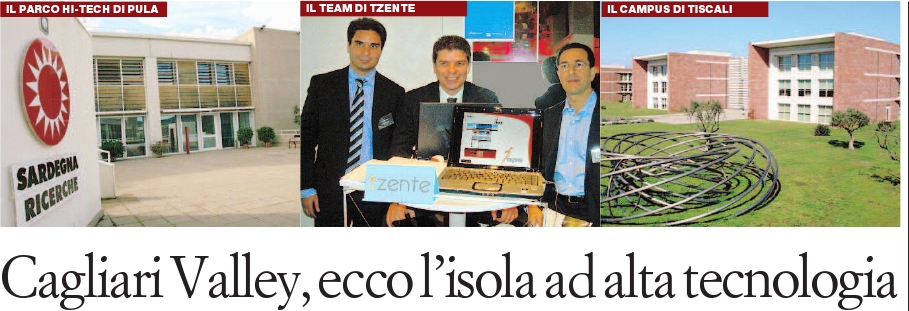
Cagliari Valley, ecco l’isola ad alta tecnologia

Foto da "Affari e Finanza" del 22/11/2010

Questo è il titolo di un interessante articolo di Catia Barone apparso sull'inserto "Affari e Finanza", del quotidiano "La Repubblica".
Nell'articolo viene ripercorsa la storia, fino ai giorni nostri, della "silicon valley mediterranea" che vede Cagliari come centro propulsivo.
Tra le aziende citate vi è anche Tzente, maintainer del progetto jAPS 2.0, cresciuta con l'obiettivo di realizzare un ecosistema di organizzazioni che collaborano a progetti di IT seguendo il modello dell'Open source.

Leggi l'articolo completo.

http://www.repubblica.it/supplementi/af/2010/11/22/multimedia/032cagliary.html

Thursday, November 4, 2010

WHAT WE THINK ABOUT PORTLET STANDARDS

jAPS 2.0 is a lightweight and flexible platform. These means that jAPS Project aim is to safe these two features. Standard technologies can help to reach it but sometimes it can be very expensive to follow strictly standards.
We think standards are useful when they can help you to solve the problems without creating new one.
Portlet standards (JSR 168 and now JSR 286) are well known to developers and after years of use what we have seen is:

  1. portlets standard are very over-hyped
  2. portlets standard introduce too much constraints
  3. portlets standard are not so efficient
  4. portlets standard are very expensive
  5. portlets are not reusable among portals: they only runs in their specific portal because they make use of portal services
We think that the evolution of the web (social network, web 2.0 ....) are changing the way we believe on how portals needed to be done.
For these reasons we chose to better define at the architecture level the portlet concept.
The result was the introduction of the "showlet" concept and of the "Plugin model" that is an architectural lightweight way to speed development, eliminate unuseful constraints and make developers free to implement their creativity.